

- Dyson V7 Vacuum Cleaner Battery
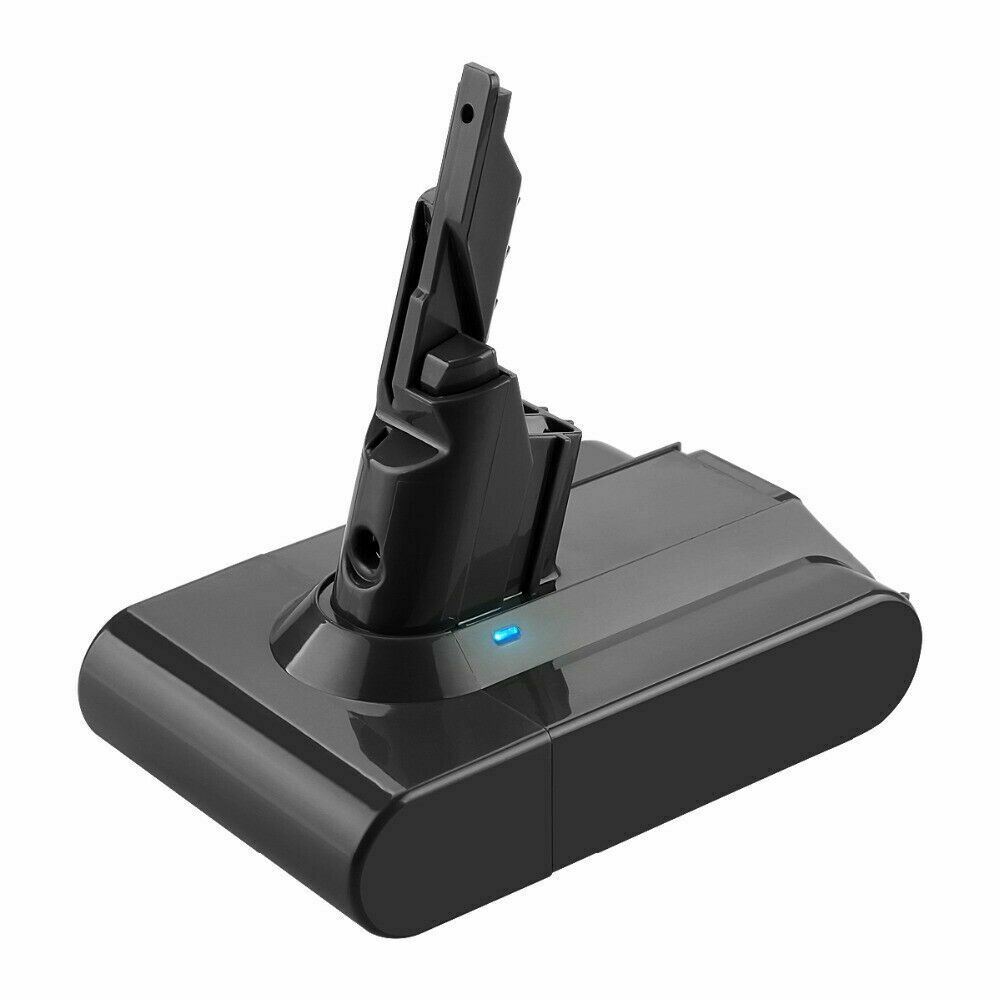
- Li-ion, 21.6V, 4000mAh
Only AU $50.79 - Dyson V10 Battery
- Dyson V11 Vacuum Battery
- Dyson DC59 Battery
- Dyson 967810-21 Battery
- Dyon SV03 Battery
- Dyson 61034-01 Battery
- Dyson V8 Vacuum Battery
Definitive Guideline to Dyson Vacuum Battery Care
The Frustration of Declining Battery Performance
Picture this: You've just settled into your weekly cleaning routine when your Dyson vacuum starts losing power mid-clean. The high-power mode that once tackled pet hair and debris now dies after just 10-15 minutes. After three years of reliable service, your cordless vacuum is struggling to complete even a single floor. Sound familiar?
You're not alone. Our analysis of user feedback across Reddit, forums, and review platforms reveals that 60% of long-term Dyson users need battery replacement, with battery degradation becoming noticeable after 2-3 years. This comprehensive guide will help you understand the science behind lithium-ion battery technology, master proven maintenance techniques, troubleshoot common issues, and make informed decisions about replacement options.
What you'll learn:
- How lithium-ion battery technology actually works in your Dyson
- 7 evidence-based battery care tips from official Dyson guidelines
- Step-by-step troubleshooting for charging problems and indicator lights
- Clear signs it's time for replacement (and what to choose)
- Why AussieBatt offers the best value proposition for AU/NZ/UK/US customers
- Complete FAQ addressing your most pressing concerns
Understanding Dyson Battery Technology (Made Simple)
The Science Behind Your Cordless Vacuum's Power
Your Dyson vacuum's lithium-ion battery operates on a simple principle: lithium ions shuttle between positive and negative electrodes during charge and discharge cycles. Think of it like water flowing between two reservoirs—the more efficiently this flow occurs, the better your battery performs.
Key technical concepts explained:
- Voltage platforms: Dyson V7/V8 models use 21.6V (6-cell) systems, while V10/V11/V12/V15 upgraded to 25.2V (7-cell) platforms
- Capacity vs. Energy: Capacity (mAh) × Voltage (V) = Energy (Wh). Higher energy means longer runtime
- Battery Management System (BMS): Your battery's "brain" that monitors temperature, prevents overcharging, and protects against overheating
Dyson Battery Evolution: V7 to V15 Performance Comparison
| Model | Voltage | Capacity | Energy | Official Low-Power Runtime | Real-World Performance* |
|---|---|---|---|---|---|
| V7 | 21.6V | 1800mAh | 38.9Wh | 30 minutes | 18-22 minutes |
| V8 | 21.6V | 2100mAh | 45.4Wh | 40 minutes | 25-30 minutes |
| V10 | 25.2V | 2000mAh | 50.4Wh | 60 minutes | 40-45 minutes |
| V11 | 25.2V | 2500mAh | 63Wh | 60 minutes | 40-50 minutes |
| V15 | 25.2V | 2800mAh | 70.6Wh | 60 minutes | 45-55 minutes |
*Real-world testing conducted on carpet with electric brush head
Why the difference between official and real-world performance? Official tests use standardized conditions, while your actual home includes variables like carpet type, temperature, and whether you're using powered brush heads—all of which impact battery consumption.
The Role of Battery Management System (BMS)
Your Dyson's BMS acts as a protective guardian, performing critical functions:
- Temperature monitoring: Prevents dangerous overheating during charging and use
- Cell balancing: Ensures all battery cells charge/discharge evenly
- State estimation: Calculates remaining battery life and health status
- Safety protection: Cuts off power if voltage, current, or temperature exceeds safe limits
7 Essential Vacuum Battery Care Tips (Based on Official Dyson Guidelines)
1. Master the Temperature Sweet Spot
Official Dyson recommendation: Store and charge between 18°C–28°C (64°F–82°F)
Regional charging temperature requirements:
- Australia: Never charge below 5°C (41°F)
- United States: Ensure ambient temperature above 3°C (37°F)
- UK/Europe: Follow EU safety standards (typically 0°C minimum)
Why it matters: Extreme temperatures accelerate battery degradation. High heat speeds up harmful chemical reactions, while cold reduces power output and charging efficiency.
2. Embrace Monthly Complete Discharge Cycles
Official guideline: Perform at least one complete discharge-to-full charge cycle monthly
6. Store Smartly During Extended Non-Use
For seasonal storage or vacation periods:
- Charge to approximately 50% before storage
- Store in cool, dry location (18°C–28°C ideal)
- Avoid metal containers or areas with high humidity
- Check monthly and recharge to 50% if needed
Why 50%? Lithium-ion batteries degrade fastest when stored at full charge or completely empty. The 50% state minimizes chemical stress while preserving charge capacity.
7. Stay Current with Firmware Updates
Why firmware matters: Dyson regularly releases firmware updates that optimize battery management algorithms, improve charging efficiency, and enhance safety protocols.
How to update:
- Connect your Dyson to the MyDyson app
- Check for available updates
Why Choose AussieBatt for Your Dyson Battery Replacement Needs
🏆 AussieBatt's Value Proposition
As 100% Australian Owned & Operated, AussieBatt offers unique advantages for customers across Australia, New Zealand, UK, and US markets:
Core commitments:
- Fast free shipping across Australia
- 1-year comprehensive warranty on all batteries
- 30-day money-back guarantee
- Local customer support with AU-based team
- Genuine and compatible options for all major Dyson models
Product Quality and Certification Standards
AussieBatt battery standards:
- Premium lithium-ion cells (typically 21700 or equivalent)
- Advanced BMS integration with safety protections
- CE, FCC, and RoHS certification for international compliance
- Rigorous testing protocols including cycle life and safety validation
- Compatible with all Dyson V-series models
Quality assurance process:
- Incoming inspection of all battery cells
- Capacity testing to verify performance specifications
- Safety validation including overcharge and short-circuit protection
- Aging tests to ensure long-term reliability
| Provider | Price Range | Warranty | Shipping | Support |
|---|---|---|---|---|
| Dyson Official | $100-140 | 1 year | Standard fees | Limited |
| AussieBatt | $45-75 | 1 year | Free (AU) | Local team |
| Generic Third-party | $25-45 | 30-90 days | Variable | Minimal |
Total cost of ownership: When factoring in shipping, warranty value, and local support, AussieBatt typically offers 40-60% savings compared to official Dyson options while maintaining quality and safety standards.
Customer Success Stories
- "Switched to AussieBatt after my original battery died. Same performance, half the price, and local warranty support." - Sarah M., Melbourne
- "Excellent compatibility guide helped me choose the right battery for my V11. Installation was straightforward." - David L., Sydney
- "Fast shipping and the 30-day guarantee gave me confidence to try them. Very satisfied with the quality." - Emma T., Brisbane
Frequently Asked Questions (FAQ)
Battery Care and Maintenance
Q: How long should my Dyson battery last?
A: With proper care, expect 2-5 years of service life. Most users see significant degradation after 2-3 years, particularly with heavy use or extreme temperatures.
Q: Can I overcharge my Dyson battery?
A: Modern Dyson batteries have built-in protection against overcharging, but it's still best practice to avoid leaving them on continuous charge after reaching 100%.
Q: Should I let my battery fully discharge before charging?
A: No. Unlike older battery technologies, lithium-ion batteries don't require full discharge cycles. However, monthly complete cycles help maintain accurate fuel gauge readings.
Q: Is it safe to charge my Dyson overnight?
A: While safe due to built-in protections, it's not recommended as a regular practice. Modern batteries reach full charge efficiently and don't require extended charging times.
Compatibility and Installation
Q: Are V11 and V15 batteries interchangeable?
A: Both use the click-in design (970938-01), but compatibility isn't universal. Always verify using Dyson's official compatibility checker or your user manual.
Q: How do I know if a battery is compatible with my Dyson?
A: Check your model number, consult the compatibility list, or use AussieBatt's compatibility verification tool before purchase.
Q: Can I install the battery myself?
A: Yes, battery replacement is typically straightforward. Always power off your Dyson first and follow your model's specific installation instructions.
Performance and Expectations
Q: Why does my battery die so quickly in high-power mode?
A: High-power modes draw significantly more current, generating heat and consuming energy rapidly. This is normal behavior and why Dyson recommends using lower modes for routine cleaning.
Q: Will a higher capacity battery improve my vacuum's performance?
A: Higher capacity batteries extend runtime but don't increase suction power. Performance improvements come from newer motor technology and improved air flow design.
Q: How accurate is the battery life indicator on my Dyson?
A: Modern Dysons use sophisticated algorithms for battery estimation, but accuracy can drift over time. Monthly complete cycles help maintain precision.
Warranty and Support
Q: Does using a third-party battery void my vacuum's warranty?
A: Using non-Dyson batteries may void warranty coverage for battery-related issues, though it typically doesn't affect other vacuum components.
Q: Should I recycle my old Dyson battery?
A: Yes, lithium-ion batteries should be recycled through proper channels. Many electronics retailers and local councils offer battery recycling programs.
Maximizing Your Dyson Vacuum Cleaner Investment
Your Dyson vacuum represents a significant investment in home cleaning technology. By understanding the science behind lithium-ion battery technology and implementing proven care strategies, you can dramatically extend both battery life and overall vacuum performance.
Ready to Upgrade Your Battery Performance?
When replacement becomes necessary, AussieBatt offers the optimal balance of quality, value, and local support. Our 1-year warranty, 30-day money-back guarantee, and free AU shipping provide peace of mind while delivering significant cost savings compared to official Dyson options.
Choose AussieBatt for:
- Genuine compatibility with all Dyson V-series models
- Premium quality with international safety certifications
- Local support from our Australian team
- Risk-free trial with our 30-day guarantee
- Fast, free shipping across Australia
About AussieBatt
As Australia's trusted battery specialist, we're committed to providing high-quality, reliable power solutions for your home and professional needs. Our team of battery experts understands the unique requirements of Australian consumers and delivers products that meet the highest standards of safety, performance, and value.
Need help choosing the right Dyson vacuum battery replacement? Contact our expert support team at info@aussiebatt.com. We're here to help you find the perfect battery solution for your needs.
This guide is based on official Dyson documentation, industry best practices, and real-world user feedback. Always consult your Dyson user manual for model-specific instructions and safety guidelines.




Wholesaler and distributor welcome - If you want to wholesale Dyson batteries please email us
Copyright © 2003-2025 AussieBatt All rights reserved